Thursday, July 14, 2016

An Historian Who Is Tired of JFK Conspiracies

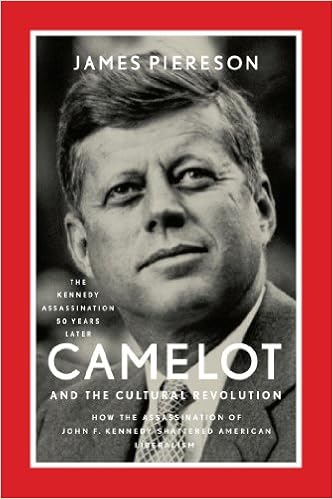
"...it is perfectly obvious to anyone interested in facts and evidence that Oswald shot President Kennedy and that he probably acted alone in doing so. There is as much evidence that Oswald shot Kennedy as there is for the conclusion that John Wilkes Booth shot Abraham Lincoln or that Gavrilo Princip assassinated the Austrian archduke."

-Historian James Pierson in

Video: Is America in Danger of a Fascist Takeover?


What Leads To A Fascist Takeover?

Consider this passage from Ian Kershaw:

There was no direct correlation between the Depression and the chances of success of the radical Right. The Depression crisis had, it is true, led to Hitler’s triumph. But Mussolini had come to power in Italy almost a decade before the slump, while in some countries fascism only emerged when the Depression was subsiding. Furthermore, other countries (notably Britain and, outside Europe, the USA), although suffering severely from the Depression, still did not produce any significant fascist movement. Only where the social and political tensions created by the Depression interacted with other prevailing factors – resentment about lost national territory, paranoid fear of the Left, visceral dislike of Jews and other ‘outsider’ groups, and lack of faith in the ability of fragmented party politics to begin to ‘put things right’ – did a systemic collapse occur, paving the way for fascism.. Italy and Germany turned out to be, in fact, the only countries where home-grown fascist movements became so strong that – helped into office by weak conservative elites – they could reshape the state in their image. More commonly (as in eastern Europe), fascist movements were kept in check by repressive authoritarian regimes, or (as in north-western Europe) offered a violent disturbance to public order without the capacity to threaten the authority of the state. Fascism’s triumph depended upon the complete discrediting of state authority, weak political elites who could no longer ensure that a system would operate in their interests, the fragmentation of party politics, and the freedom to build a movement that promised a radical alternative.

-Historian Ian Kershaw in
Wednesday, July 13, 2016

Is Fascism A Left or Right Wing Phenomenon?

Here is a passage on Mussolini from the book Modern Times:

He produced a resounding totalitarian formula, much quoted, admired and excoriated then and since: Everything within the state, nothing outside the state, nothing against the state.’ A whole series of ‘fascist laws’ were drawn up, some constitutional, some punitive, some positive, the last being the Leggi di riforma sociale, which purported to bring the Corporate State into existence.

-Historian Paul Johnson in


Most social commentators associate fascism with right wing politics. Right wing enthusiasts point out that fascist regimes have more in common with left wing tyrannies. The key words in yellow above are where the true emphasis lies in a fascist movement. The state is the life-blood of the nation. No institutions are free from its control. It may pursue a combination of liberal and conservative policies, but it pursues its own interests, period.

Tuesday, July 12, 2016

Did the Atom Bomb Prevent Russia From Conquering All of Europe?

Here's a passage from a book I read recently:

...a meeting of the Politburo in 1944 had decided to order the Stavka to plan for the invasion of France and Italy, as General Shtemenko later told Beria’s son. The Red Army offensive was to be combined with a seizure of power by the local Communist Parties. In addition, Shtemenko explained, ‘a landing in Norway was provided for, as well as the seizure of the Straits [with Denmark]. A substantial budget was allocated for the realisation of these plans. It was expected that the Americans would abandon a Europe fallen into chaos, while Britain and France would be paralysed by their colonial problems. The Soviet Union possessed 400 experienced divisions, ready to bound forward like tigers. It was calculated that the whole operation would take no more than a month…All these plans were aborted when Stalin learned from [Beria] that the Americans had the atom bomb and were putting it into mass production.’Stalin apparently told Beria ‘that if Roosevelt had still been alive, we would have succeeded’. This, it seems, was the main reason why Stalin suspected that Roosevelt had been secretly assassinated.

-Historian Antony Beevor from the book


Was Napoleon Really At Fault?

Here is a passage from a book I am currently reading:

Napoleon is often accused of being a quintessential warmonger, yet war was declared on him far more often than he declared it on others. France and Britain were at war for nearly half the period between the Glorious Revolution of 1688 and Waterloo, and Napoleon was only a second lieutenant when the Revolutionary Wars broke out. He launched the Peninsular War and the war against Russia in 1812 in the hope of extending the reach of his ‘Continental System,’ a misguided protectionist answer to Britain’s control of the seas, and thereby force Britain to sue for peace. It was thus Colbertian protectionism that brought him down, far more than the bloodlust and egomania of which he is so often accused.

Were Republicans Really Against Civil Rights?


Here a excerpted passage from a book I recently read on Nixon:

In an underappreciated role, Nixon was Eisenhower’s point man on civil rights. Although Lyndon Johnson has been credited with passing the 1957 Civil Rights Act, it was the Eisenhower administration that pushed the bill. Earlier, Nixon had taken the lead by steering government contracts to black businesses.

-Historian Evan Thomas from the book